- Published on
This is uncorrected text from the Advance Readers Copy.
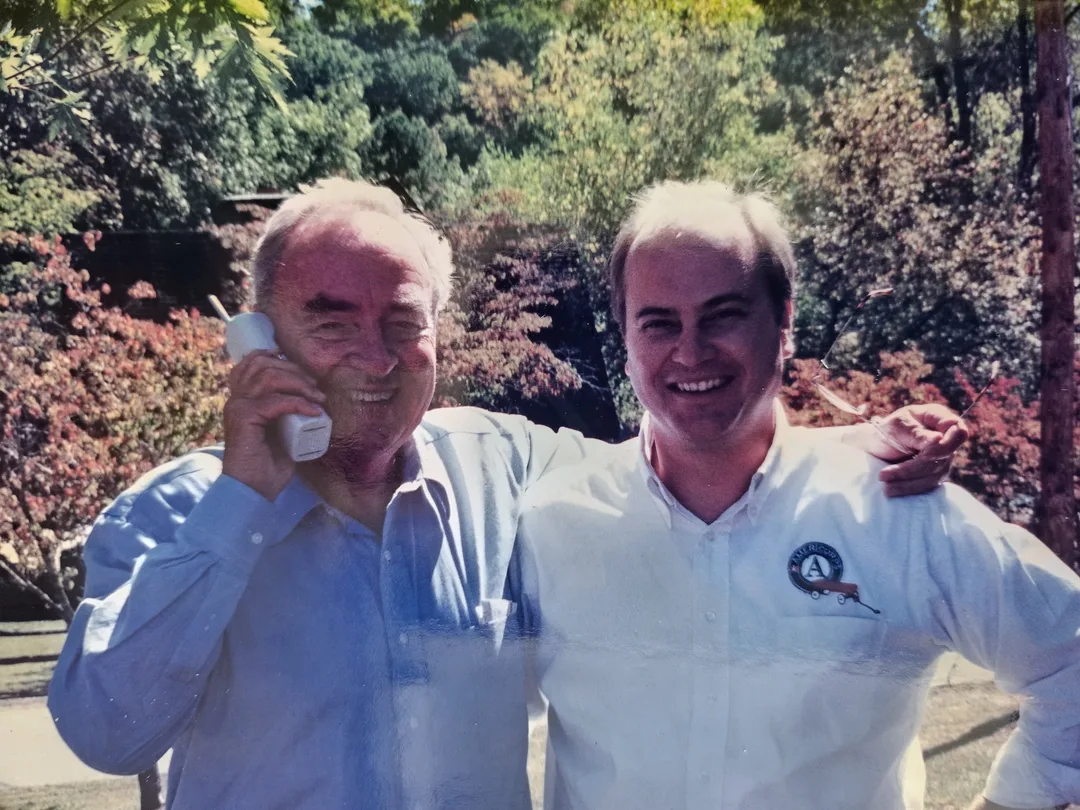
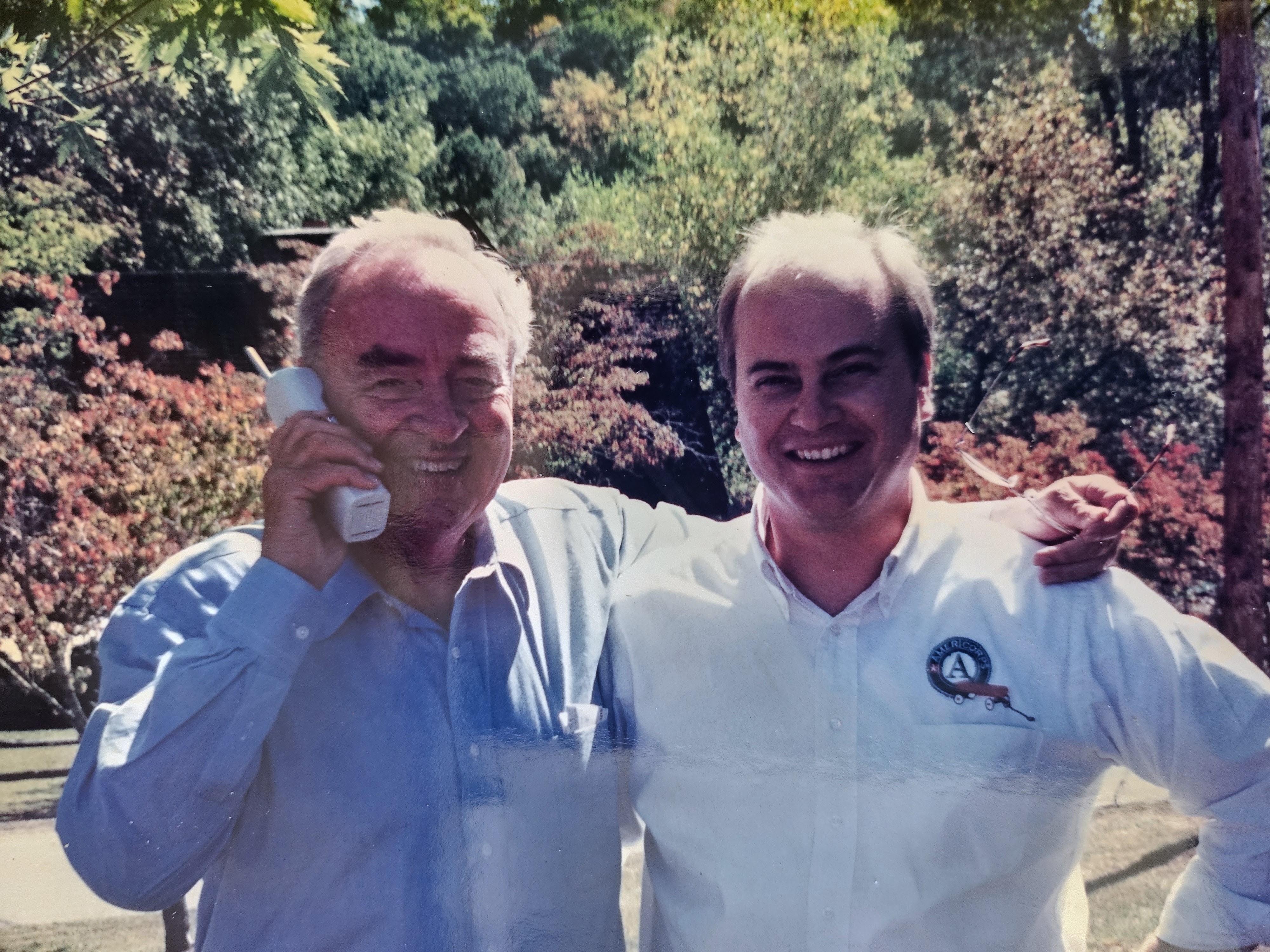
Top photo: Harris Wofford and Fred Cole at Indian River Marina on Norris Lake in 1999.
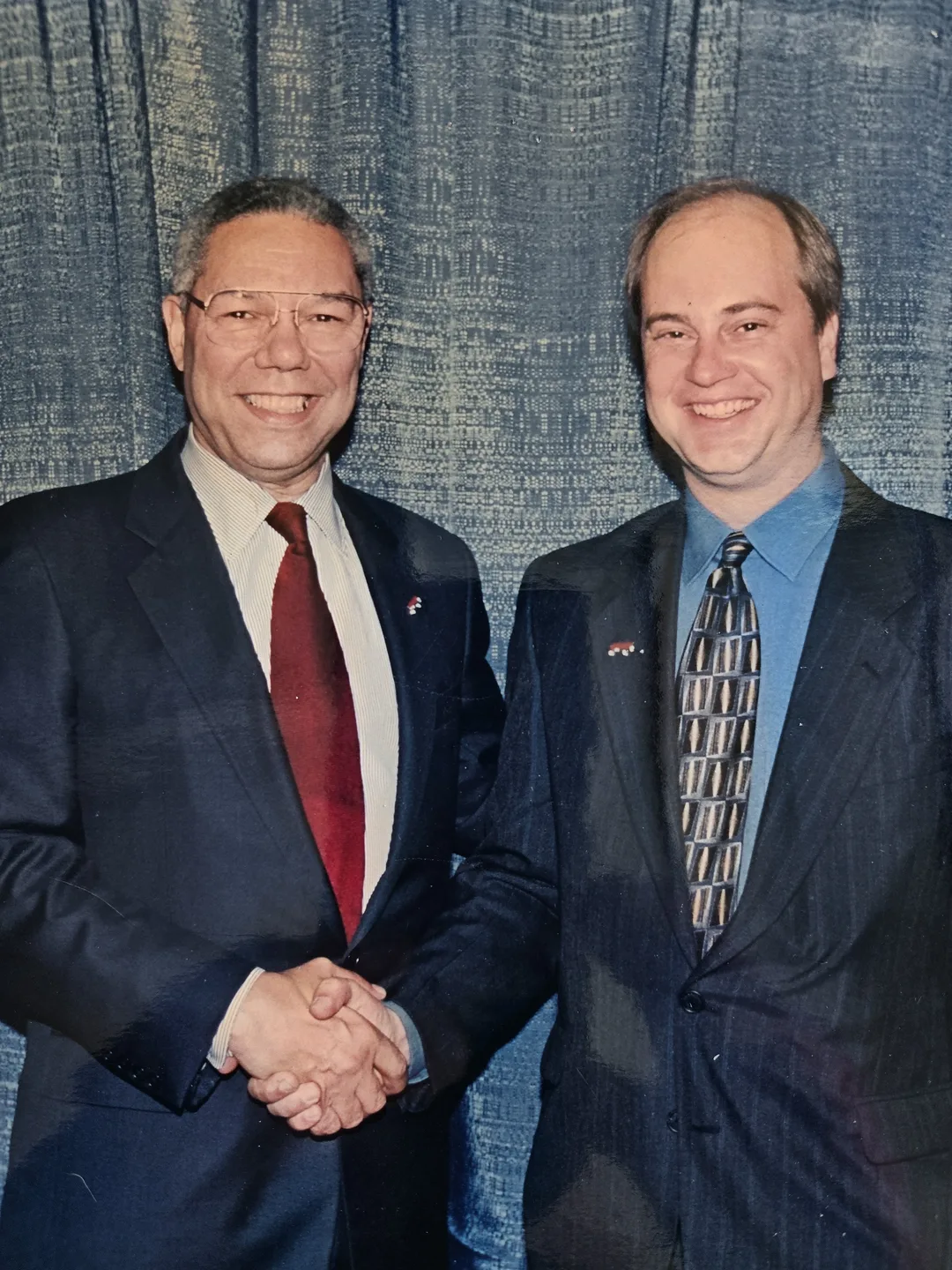
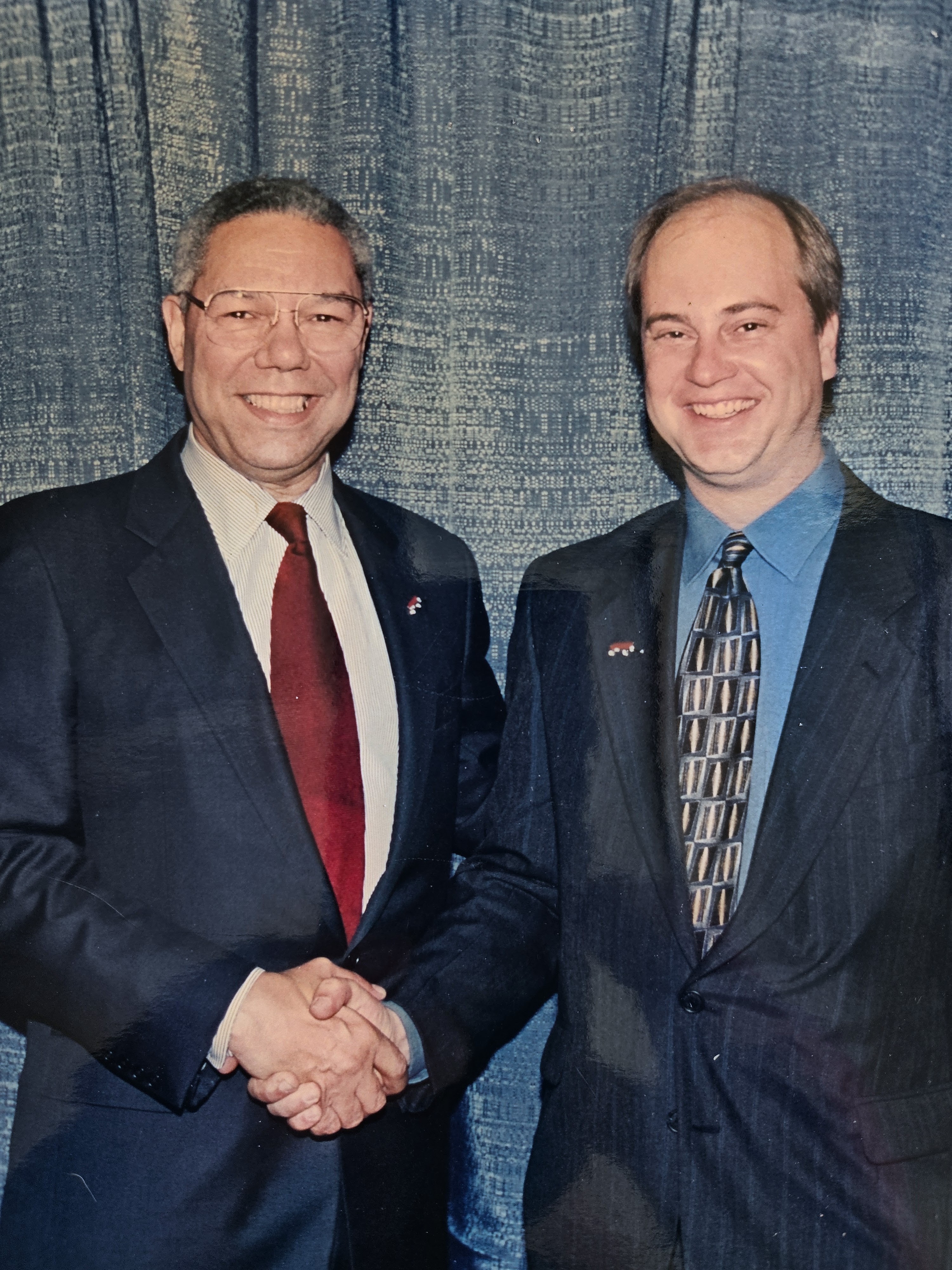
Bottom photo: Fred and General Colin L. Powell in Knoxville 1998.
Intro to this excerpt
So, I had just picked up Harris Wofford at the Knoxville airport and we were driving the 50 miles up to Norris Lake where we were having a big meeting with people from all over the country. This was my third time to pal around with Wofford, but I had never really got into the details of my not-so-normal life before then. Harris was interested in how I came to be involved in national and community service, and I gave him the nutshell version…
“Say again?”
Harris liked my story, so I figured I would sweeten it with more details. It was always a little fun shocking people with the truth about my prison past; watching the bewildered look in their faces as they tried to reconcile the fact that one of the main leaders of national service and America’s Promise in Tennessee was actually a convicted felon just recently released from the big house. It didn’t make sense.
“When I first popped up in Campbell County, some of the local people were a little suspicious of me since I came to town after spending five-years in federal prison for growing marijuana,” I blurted out—at the same time trying to watch the road and drive, but also see the look on Harris Wofford’s face when first hearing about my notorious history. Sometimes, Harris was a little hard of hearing, and not too sure that he heard me right he said, “Say again?”
“Yes sir,” I said with a chuckle. “Hard to believe, but true. I came into town a stranger, weaseled in with the right people, persuaded them I had ideas that would truly improve the overall quality of life, and the lives of young people in the community, and here we are.”
We talked non-stop the remainder of our ride together. He told me his jail story when he got put into the Cook County jail at the 1968 Democratic National Convention in Chicago. Harris and others from inside the convention went out to show support for peaceful demonstrations on the streets of the Windy City. Mayor Richard Daley had unleashed his police force on the protesters and there had been violent confrontations. The police used excessive force against almost anybody who looked young or looked like they were supporting the demonstrations.
With Billy clubs Chicago police indiscriminately beat and bloodied hundreds of protestors. After police arrested protestors they continued the beatings, even attacking reporters and cameramen trying to cover the story as it was happening. Wofford and 27 others in his group were arrested and taken to jail. He was frisked, photographed, finger-printed, and put in a holding cell. Someone had a small transistor radio, and for a while they were able to listen to some of the proceedings going on back at the convention, and even heard some of the acceptance speech from the Democratic nominee, Vice President Hubert H. Humphrey, before the battery in the radio died. On Friday morning around 5:00 a.m., Harris paid fifty-dollars on a $500.00 bond and walked out of the Cook County jail onto the embattled streets of Chicago a free man.
Having researched and studied the historic person riding in my car I already knew most of the stories the old guy was retelling, but hearing them from Harris himself was especially interesting for me. I wanted to hear more about his life, but after hearing about my having been in prison he wanted to talk about that. He was interested in how being in prison for so long had affected me? He wondered if the experience had made me bitter?
“I give myself an A+ for how well I took my F,” I said. “I suppose I could be a little bitter but I’m not,” I told him, same as I told everybody when the subject came up. “It’s not my nature. I wouldn’t be here if I hadn’t gone there, and here is good. Karma, you know. It wasn’t a joy ride, and it did dramatically affect my life and the lives of my loved ones, but didn’t totally fuck things up, just slowed them down for a while,” I said, reflecting on the five-years of hell I had just emerged from living.
“I will admit,” I confessed to him, “that it was a little scary coming back out into the free world and having to figure out how you were going to survive, but I always felt like I was going to be ok.” I paused, thinking a moment, and then said, “It took a minute to get back my confidence, but not too long. After spending nearly five-years in the joint I was ready to get on with my life, with a new appreciation for time not being wasted, and for freedom, and the pursuit of happiness; you know what I mean? America’s Promise,” I said with a chuckle.
Wofford listened and nodded, and was absorbed in the conversation.
“The only residual hangover from the whole prison thing I find sometimes bothersome is having to address the scarlet red scars of a felonious past, like I am having to do now with you. It’s been kind of on a ‘need to know’ basis, but with people who matter, and with whom I intend to have an honest relationship, I have to share my history, and they can decide if they are ok with it or not.”
General Powell at the urinal
I told him the short story about having to tell General Powell he was embracing a jail bird. Being the former commander-in-chief of America’s Special Forces, General Stiner was the kind of guy who always covered every base—no loose strings. The fact that General Powell was about to appear in public on stage with a guy who just got out of prison, was loose string information Stiner was obligated to give Powell. We wouldn’t want General Powell’s national reputation sullied by someone like me without his prior knowledge. Powell had to decide if he was cool with me or not.
General Powell already knew about me and the work a big number of other people had been doing in East Tennessee, and to acknowledge, celebrate, and help move our efforts forward he came down to Knoxville. Powell was also pleased that his old friend “Country Carl” had found his way to the America’s Promise movement, and was anxious for the two old buddies and former warriors to hook up once again, but this time for battles to help young people find their way to America’s promise.
So, in the bathroom at McGhee Tyson National Guard Air Base when Powell was standing at the urinal after his flight down from Washington D.C., General Stiner briefed him about me. When I asked General Stiner about it later he told me that Powell had said, “We all have a past. He’s the kind of guy we’re trying to save here. From all I’ve heard he seems to be doing good now. Let me know if anything changes,” and that was it.
Harris blurted out, “I’m ok with it too! That’s a great story,” which was a high compliment coming from someone whose whole life had been one historic story after another in the political history of our nation, and the long and winding road of nonviolent struggle against injustice, and for human rights. After almost six decades, here he was in the car with me; still pounding the pavement on roads heading toward making America a better place for all of its citizens to live, work, and raise their families. By the time we arrived at the marina, I had won the admiration of someone truly admirable.